




In March 2024, WINCan’s Dr. Thomas Carey had three guest interactions (virtually) at the University of King’s College to work with students enrolled in a non-credit career development program called Liberal Arts Passport to Innovation. The Passport program is geared towards helping students frame their assets for employers and understand how their liberal arts skills and interests could be a fit with the innovation space. However, it does not teach innovation skills as such. The six student authors listed above were enthusiastic about adding two additional sessions to this co-curicular experience so that they could gain more familiarity with systematic approaches to innovation. A chapter from the WINCan Open Educational Resources (in the eCampus Ontario Open Library) on "Innovation Adaptation” was selected for this purpose and the class then decided to take this WINCan OER resources itself as the Innovation to be considered for adaptation in a pilot project.
Welcoming New Higher Ed Partners for 2024 and 2025
This month, we were delighted to have educators from four new institutions collaborating with us on Developing Student Capability for Inclusive Innovation in the Workplace: …
Each of these new partners – and their distinctive institutions – will add to the diversity of our higher ed team, in line with the innovation team precept that a more diverse team can create greater opportunities for breakthrough innovations. This is also a wonderfully interdisciplinary group, with backgrounds or current responsibilities in the areas of Communications Arts, History, Women’s Studies, Science, Business, English Literature, Health Sciences, Education, Philosophy, Workplace Learning and Employability.
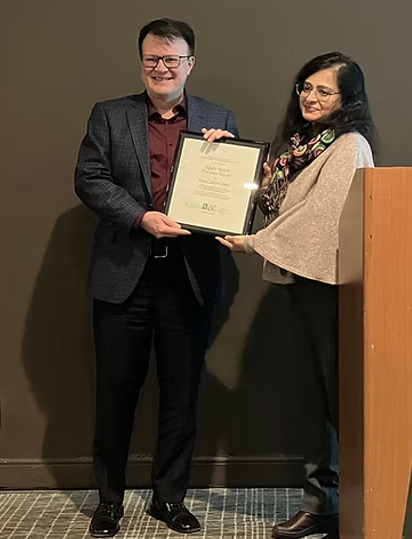
WINCan Workplace Partner Wins National Award in Developing Innovation Culture
For our WINCan team, one of the highlights from last year’s project with the Government of Canada’s Future Skills Centre was the opportunity to interact with the two lead Innovation Catalysts at ENWIN Utilities in Windsor (ON):
Barry Leavitt, ENWIN’s Director of Operations and Innovation (the “Innovation” part of the title having been added to reflect the growing importance of inclusive workplace innovation at ENWIN), and
Rosana Kemsley, ENWIN’s Manager of Human Resource Services.
Inclusive Innovation Initiatives at National, Regional and City Levels
In a previous post in this series, we explored a reframing of Workplace Innovation as Inclusive Innovation at the Workplace level. The larger framework of Inclusive Innovation aims to expand the range of people who participate in innovation and who benefit from its impacts.
The scope of Inclusion Innovation has been expanding to consider the impacts of innovation on the environment we share with other forms of life. Inclusive Innovation has also become a lens through which to expand participants and beneficiaries in global initiatives like the United Nation’s Sustainable Development Goals:
Workplace Innovation for Quality of Work: Research Synthesis and Recommendations on Adaptation for Canadian Contexts
The full results from our 2022-23 applied research project with Canada’s Future Skills Centre are now available on their website.
We’ve copied below the Executive Summary, as well as the Key Insights from the project. You can also download the full report, or read more on the FSC Site for these topics:
Enabling Inclusive Innovation in Canadian Workplaces
Context: In the previous blog post in this series expanding on results from our recent project for Canada’s Future Skills Centre, we summarized relevant research we applied on government policies and programs to advance Workplace Innovation. There is a much larger body of research on policies and programs to advance the related theme of “Inclusive Innovation”. In this post, we will explore the links between those two policy areas, and highlight research in areas common to both themes (e.g., expanding innovation opportunities in the workplace for equity-seeking groups).
Leveraging a Diverse Academic Collaboration for Capability in Inclusive Workplace Innovation (part II)
In previous posts we summarized our rationale for engaging a diverse set of academic institutions to collaborate on developing capability in Inclusive Workplace Innovation. We also highlighted the international recognition for our initial collaboration via our European award for Innovation and Entrepreneurship Teaching Excellence in September 2022.
This month our scholarly article on that initial collaboration was published in the open-access European Journal of Workplace Innovation (Vol 8, Issue 1). The Editor’s introduction to the Issue highlights how its contents reflect a wider diffusion of Workplace Innovation beyond its European origins:
Insights from European Research on Public Policy and Programs to Advance Workplace Innovation
In a previous blog post reporting the Results of our research project on Workplace Innovation and Quality of Work, we noted several recommendations regarding Future Directions where further work is needed (beyond the Research-to-Practice knowledge translation processes which were our focus with the individual workplace partners in that project). In forming those recommendations, we also analyzed research insights and exemplary practices from Europe on public policy and programs to advance workplace innovation – that is, we were ourselves engaged in research-to-practice adaptations for our Canadian context. In this post we review some of the experiences from Europe we found to be most relevant.
Work-Integrated Learning Placements as Catalysts for Research Adaptation
In a previous post summarizing the Results of our recent project on Workplace Innovation and Quality of Work, we described Research-to-Practice Case Story experiences with our workplace partners. These experiences demonstrated how research insights from Europe – and some from Canada – can be adapted to advance employee-led workplace innovation in Canadian workplaces. We also noted some of the Implications to be addressed if we are to successfully scale up those interactions with a broader range of workplace partners.
A Living Labs Collaboration within Regional Workforce Development to Advance Capability for Workplace Innovation
In a previous blog post reporting the Results of our research project on Workplace Innovation and Quality of Work, we noted three Future Directions where further work is needed (beyond the Research-to-Practice knowledge translation processes which were our focus with the individual workplace partners in that project). In this post we explore the first of those Future Directions: using existing collaborations for regional workforce development as the focal point for supporting research-informed advances in employee-led workplace innovation, by adapting a Living Labs model as the structure for ongoing collaborations.
Research-To-Practice Insights on Digital Transformation in the Nordic Forestry Sector
In a previous post on Results from our research project on Workplace Innovation and Quality of Work, we mentioned the one workplace partner for whom our initial effort to provide a targeted research synthesis was not successful (“ForestCo” in B.C.). They requested a research synthesis with examples of workplace innovation specific to their industry sector. However, our research did not identify insights on inclusive workplace innovation specific to the Forestry context (for reasons explained in that previous post).
We later followed up with a research synthesis on a closely-related issue of interest to ForestCo – Digital Transformation in the Forestry Sector – which also included research references on “why digital transformation requires workplace innovation[i]” and on the potential impact of digital transformation on the demographics (i.e., “male-dominated”) of the Forestry workforce. This research synthesis, whose highlights are summarized
Inclusive Workplace Innovation and Quality of Work: Research Project Results
We are now in the final stages of writing up results from our most recent applied research project with workplace partners – sponsored in part by the Government of Canada’s Future Skills Centre. We focused on adapting European research insights and exemplary practices on employee-led Workplace Innovation and Quality of Work into Canadian contexts. Our goal was to determine the applicability of these strategies for scaling up workplace innovation across Canada and to explore supportive public policy to accelerate these advances.
This post summarizes the major results from the project, excerpted from the final Project Report.
Enhancing Workplace Innovation with Research Insights: the EngServ Story
Our previous post this month contained highlights from one of our workplace partners who successfully advanced employee-led workplace innovation in their organization by adapting Research-to-Practice insights on Workplace Innovation and Quality of Work from Europe. In this companion post, our team members share highlights from a second workplace partner, EngServ, (a Calgary-based Engineering Services company). Stephen Cohos is a professional engineer and Innovation Project Coordinator. Bios for our WINCan team authors are available here.
Applying Research-to-Practice Insights on Workplace Innovation: ENWIN’s story
We are in the concluding stages of our research project on Workplace Innovation and Quality of Work, undertaken with in collaboration with numerous workplace partners across Canada with the support of the Government of Canada’s Future Skills Centre. You can find background info and interim results in the project blog posts, and we will be posting over the next few months on the Results, Implications and Future Directions.
The project plan was to share with workplace partners curated Research-to-Practice insights on Workplace Innovation and Quality of Work, and to have them create scenarios about how their organization could apply those insights to enhance their employee-led workplace innovation. Two workplace partners went further and have implemented those scenarios; in this post we’ll be sharing highlights from one of those success stories.
Research-into-Practice Examples to Advance Employee Workplace Innovation
In this post, we will highlight three key collaboration processes between our project team and our workplace partners which enabled their mobilization of research into practice. We will then describe the Research-to-Practice Focus points selected by each workplace in that process, to direct our selection of research insights and exemplary practice for advancing the impact of their employee workplace innovation.
Factors that Influence Motivation for Workplace Innovation (Part II)
In this post, we will present similar reflections re research insights on the remaining three Motivation to Innovate factors identified:
Innovation Results as an (intrinsic) Incentive: Improving Employee Quality of Work Life
Extrinsic Incentives: What is the role of financial or other incentives?
Reducing the Perceived Costs and Risks of Workplace Innovation
Leveraging a Diverse Academic Collaboration for Capability in Workplace Innovation
While teaching and learning for Entrepreneurship capability is an established activity in postsecondary education, teaching and learning for capability in employee-led Workplace Innovation is a more recent development. Initiatives to develop workplace innovation capability in postsecondary education reflect growing recognition that “innovation and entrepreneurship are not only distinct concepts, but they also play out in postsecondary institutional contexts in different ways” [Selznick 2019].
Factors that Influence Motivation for Workplace Innovation (Part I)
Recent research by Terry has helped to clarify for us the factors that influence employee motivation to engage with workplace innovation [Soleas 2020, 2021]. This research adapted a common framework used for assessing motivation in the workplace [Flake et al 2015], and included an initial study with 30 recognized Canadian innovators as interviewees. The resulting prototype survey instrument was then iteratively refined in prototype tests with another 500 Canadians who had been identified as leading innovators in their workplaces.
Collaborating on Workplace Innovation Capability in ‘The Future of the B.A.’
Our course units in Faculties of Arts demonstrate the feasibility of enhancing B.A. programs to develop student capability for workplace innovation, extending other generic capabilities for employability currently being developed in those programs [Causevic 2022]. In this post, we address two issues about such B.A. program enhancements, as raised with us by postsecondary academic staff in B.A. programs which do not have a specialist vocational or professional focus (e.g., those labelled in Australia as a “generalist B.A.” [Gannaway & Sheppard 2019] and in North America as “Liberal Arts” programs).
Workplace Innovation: From Goals to Game Plans
In this post, we’ll summarize the From Goals to Game Plan process to advance employee-led innovation in our partner organizations, which has emerged from the cases we have been working on with a set of initial representative workplaces. We’ll also illustrate our own use of such research insights and exemplary practices in developing this framework for two purposes:
as an organizing structure for our workshops to help partner workplaces to identify where and how they want to advance workplace innovation with their employees
and later as the organizing framework for two key outputs from the Workplace Innovation and Quality of Work Life project, a Research Adaptation Synthesis and its accompanying illustrative Case Stories from participating workplaces.